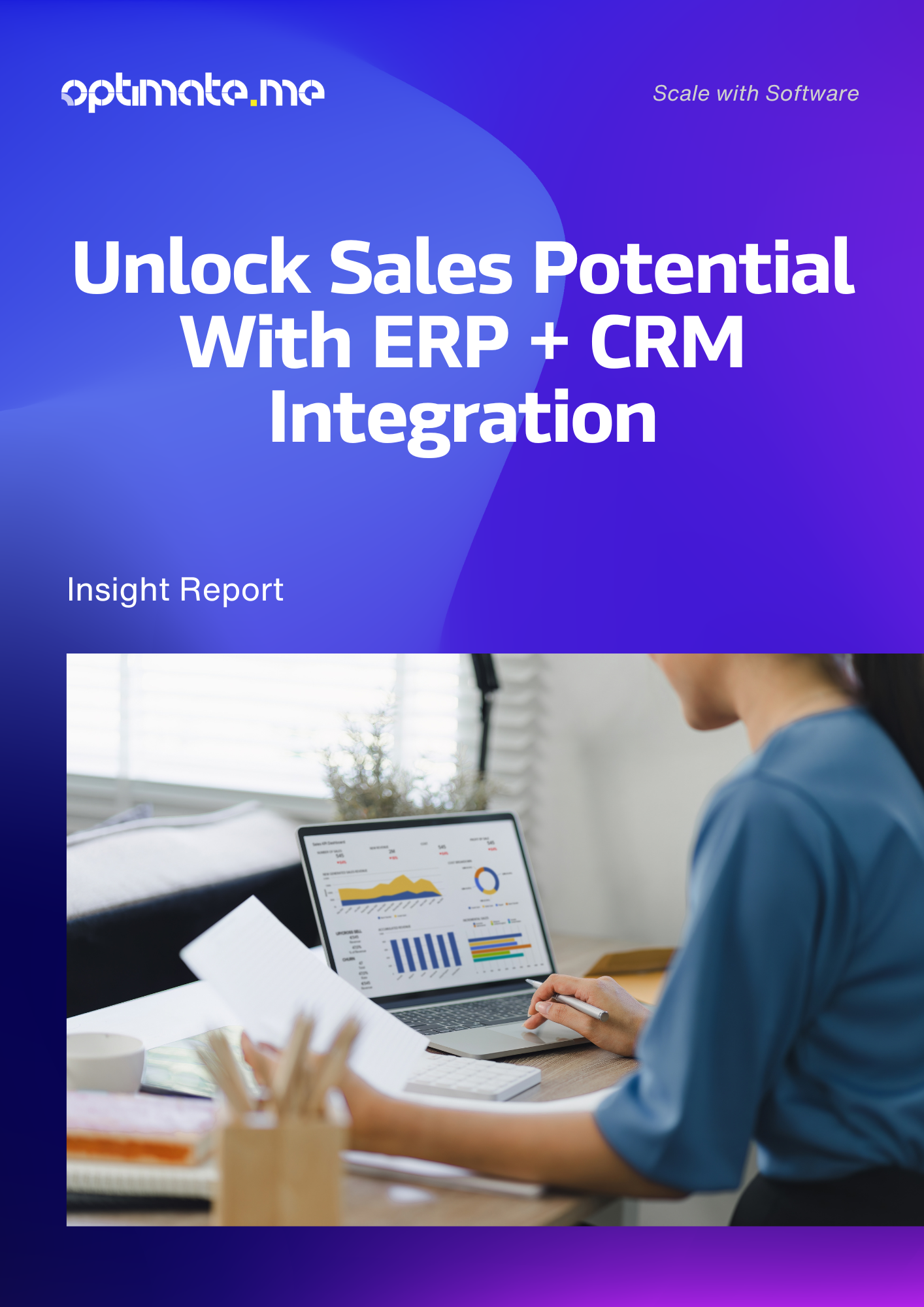
For many organisations, the ERP has been the operational heartbeat for years, managing orders, inventory, finance, and day-to-day essentials. But as markets become more competitive and customer expectations rise, organisations relying solely on ERP systems hit a common wall: ERP helps you run the business, but it doesn’t help you grow it.
This is where CRM integration steps in, transforming how teams manage customer relationships, improve visibility, and unlock new revenue opportunities.
The core pain points organisations experience when ERP data sits in a silo, and what changes when that operational intelligence is surfaced in a CRM where sales, service, and leadership teams can actually use it.
ERP + CRM organisations ready to modernise
Sales, service, finance, operations, and leadership teams who want customer data, order history, pricing, and account insights available in one place — without relying on complex ERP screens or internal “data hunting”.
Across industries, challenges show up consistently when ERP operates in a silo because ERPs weren’t built for customer intelligence. Common problems include:
What this looks like in practice:
Sales reps fly blind, service teams get overwhelmed with unnecessary queries, and leadership lacks visibility into pipeline health and strategic opportunities.
Integration is where the biggest gains are realised because you bring operational truth into the systems that drive revenue, customer retention, and frontline execution. Here are 3 major gains you will receive when integrating:
Through OptiSync, Optimate.me’s purpose-built integration engine, you have access to live pricing, order history, invoices, balances, credit status (and more) inside the CRM - so teams can act without jumping between systems.
With Optimate.me’s Account Growth Suite you can automate follow-ups, activity capture, reporting, and account coverage to ensure managers get visibility and reps spend time on customers, not admin.
Most businesses already have the data they need to grow. The problem is it sits in their ERP, invisible to the people who could act on it and requires that they have time to investigate and analyse to uncover the insights they need to take action. When your ERP connects to SugarCRM through Revenue Intelligence, that changes. AI continuously analyses your back-office data and surfaces actionable insights directly in the CRM, automatically flagging when a customer's spend drops, a product category goes quiet, or a cross-sell opportunity emerges. Reps see the finding and the supporting data in one place, with no reports to run and no systems to switch between. The results speak for themselves: total sales value up 19%, customer spend up 14%, and average order value up 13%. That is the difference between a CRM that records what happened and one that tells you what to do next.
Here’s what this can look like when implemented properly, centralised customer data, streamlined quoting, and reduced internal effort.
Before integration, customer information was fragmented, sales teams lacked visibility, and internal effort ballooned just to answer basic questions (60+ internal calls a day). After implementing CRM with ERP integration, customer data became centralised, quoting was streamlined, manual maintenance reduced, and teams could access what they needed instantly.
The measurable impact:
In this Insight Report we discuss the challenges facing most companies today when considering integrating their legacy ERP system with a modern CRM system.
Organisations consistently value working with a local, deeply experienced partner who understands both the commercial and technical realities of ERP and CRM ecosystems.
“Optimate.me took the time to know our business, our challenges, our team and helped us navigate and execute the changes.”
“Optimate.me has been critical in deploying SugarCRM with us and its important to have a good partner to work with on an ongoing basis.”
“Optimate.me configured SugarCRM in such a way that we can track a project, as well as historical view of other projects stakeholders have worked on, and this information has become a critical part of our sales strategy.”
Ready to integrate your ERP with your CRM?
Talk to the team about what’s possible, what’s proven, and what the integration roadmap could look like for your environment.


We welcomed Act-On's Kade Swanson-Theisen and Andy Porter for a morning brew to discuss what's new and what's next for the Marketing Automation platform.
Full article...With dozens of CRM and marketing automation platforms available, how do you choose the right one? This guide compares the four leading platforms we implement for New Zealand businesses and explains why having the right implementation partner matters more than the software itself.
Full article...Digital transformation is the process of using technology to fundamentally improve how your business operates and delivers value to customers. For New Zealand SMEs, this typically means moving from disconnected, manual processes to integrated digital systems that work together.
Full article...